A strong portfolio website helps an architecture studio win more projects by giving prospective clients clear evidence of what it can deliver.
It should show more than attractive buildings and interiors. The website needs to communicate the studio’s capabilities, experience, design approach, and relevance to the type of project the visitor is considering.
The basic journey is straightforward:
Strong visuals attract attention
Relevant projects build interest
Clear context establishes credibility
A direct next step turns interest into an enquiry
A portfolio website cannot replace referrals, proposals, meetings, or client relationships. It can make each of them more effective by giving prospective clients a convincing place to evaluate the studio before making contact.
A Portfolio Website Is Part of the Sales Process
Prospective clients often visit a studio’s website before starting a conversation.
They may arrive through a referral, search result, social media post, industry publication, directory listing, or link shared by another decision-maker. Even when the introduction comes from someone they trust, they will still want to review the studio’s work for themselves.
At that point, the website becomes part of the sales process.
The visitor is trying to answer a few practical questions. Does this studio understand projects like mine? Is the quality of its work appropriate? Does its experience feel relevant? Can I trust it to handle the project well?
A strong portfolio helps answer those questions without requiring the visitor to search through several unrelated pages. It gives the studio a chance to make its value clear before the first meeting.
A Strong Portfolio Creates a Clear Visual Pitch
A portfolio website acts as a visual pitch before the studio has an opportunity to present its work directly.
Within a short visit, a prospective client should be able to understand what the studio designs, the quality of its work, the types of projects it handles, and why its experience may be relevant.
This requires more than placing attractive images in a gallery. Project selection, image order, written context, and supporting visuals should work together to communicate a clear message.
A studio pursuing hospitality work may emphasize atmosphere, guest experience, material character, operational flow, and completed projects in the same sector. A studio seeking larger commercial commissions may place more attention on scale, coordination, planning, and its ability to manage complex requirements.
The portfolio does not need to explain everything at once. It should make the studio’s strongest and most relevant capabilities easy to recognize.
This also supports referrals. When someone recommends the studio and shares its website with another decision-maker, the portfolio continues the introduction without relying on that person to explain the studio’s value in detail.
A Portfolio Should Prove What the Studio Can Deliver
General claims are easy to make.
Phrases such as “thoughtful design,” “innovative solutions,” or “high-quality service” have little persuasive value without evidence. A portfolio provides that evidence by showing the type and quality of work the studio has produced.
Projects can demonstrate experience with particular sectors, building types, design styles, materials, site conditions, project scales, or technical challenges. They can also show whether the studio has a consistent standard across different commissions.
The strongest proof does not come from publishing the largest possible gallery. It comes from presenting relevant work with enough context for visitors to understand what the studio contributed and why the project matters.
A smaller collection of well-developed case studies can be more persuasive than dozens of disconnected images.
Strong Visuals Shape the First Impression
Architecture is visual, so project imagery has an immediate effect on how the studio is perceived.
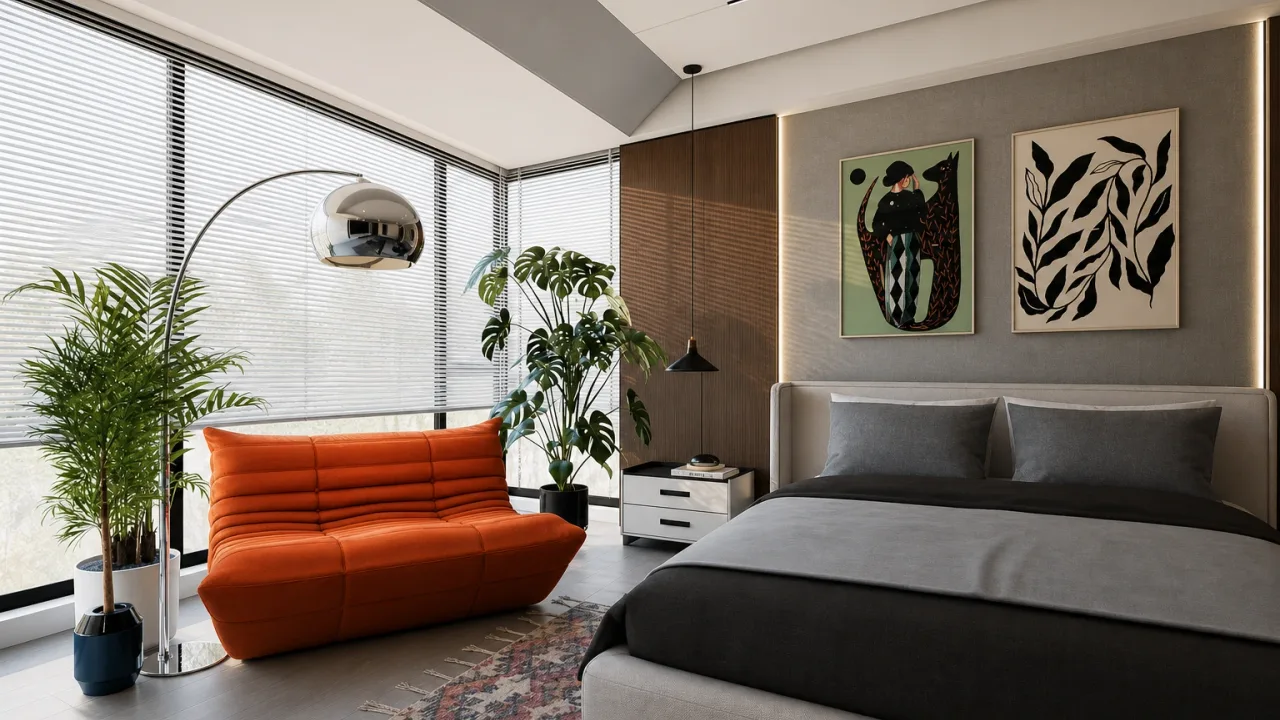
Professional photography can show completed spaces, material quality, light, scale, and how people use the environment. For unbuilt projects, architectural renderings can communicate the design before construction is complete.
Drawings, diagrams, models, animations, and process visuals can strengthen the presentation when they explain something the final images do not show on their own.
Quality and consistency matter. A project page that combines polished hero images with low-resolution drawings, inconsistent crops, or unfinished graphics may feel less considered, even when the underlying design is strong.
The visuals do not need to look identical. Photography, renderings, plans, and diagrams serve different purposes. They should simply feel like parts of one intentional project presentation.
Attractive Images Are Not Enough
A visitor may admire a project without understanding what the studio actually did.
A strong project page should provide enough context to explain the work. This may include the project type, location, status, scope, design challenge, and the studio’s specific responsibilities.
The explanation does not need to become a long technical report. A concise introduction can often provide enough clarity.
For example, a hospitality project may look impressive, but the visitor may not know whether the studio led the architecture, interior design, visualization, documentation, or only one part of the project. Clear role descriptions prevent prospective clients from making the wrong assumption.
They also help the right visitors recognize the services that are relevant to them.
Relevance Matters More Than Portfolio Size
Prospective clients rarely review every project on a studio website. They look for evidence that the studio understands work similar to their own.
A hospitality developer may focus on hotels, restaurants, guest experience, and operational planning. A workplace client may care about circulation, flexibility, brand expression, and employee use. Another design studio looking for technical production support may evaluate rendering quality, model development, CAD output, and presentation standards.
Project organization can make this evidence easier to find.
Categories based on sector, project type, service, location, or status can help visitors reach the most relevant work without sorting through the entire portfolio. This is particularly useful for studios that serve several markets or provide more than one service category.
The portfolio should help the visitor answer:
Has this studio handled projects, audiences, or challenges that resemble mine?
Case Studies Build More Confidence Than Galleries Alone
A gallery shows the final appearance of a project. A case study explains how the studio approached it.
A useful case study may describe the brief, site conditions, client priorities, design constraints, and decisions that shaped the result. This helps prospective clients see that the work was not only visually successful, but also responsive to a real project context.
Selected plans, sections, diagrams, sketches, or development visuals can reveal the reasoning behind the design. They may show how circulation was resolved, how spaces relate to one another, or how the studio responded to a difficult site condition.
The goal is not to publish every internal document. It is to choose the material that helps a prospective client understand the studio’s thinking and contribution.
This is particularly important when several studios can show attractive final images. Clear case studies help distinguish the quality of the process behind them.
Different Visual Formats Support Different Sales Messages
No single format communicates every quality of an architectural project equally well.
Still images provide controlled compositions. They can direct attention toward a specific space, facade, material, or design moment.
Plans and diagrams explain organization, circulation, relationships, and ideas that may not be obvious from perspective images.
Animations and walkthroughs communicate sequence and movement. They can help viewers understand how spaces connect and how the project unfolds.
A 360-degree panorama allows the viewer to look around from a fixed position. It can communicate the relationship between surrounding surfaces, furniture, openings, and connected areas more completely than a conventional still image.
The portfolio should select formats according to what the project needs to prove. Adding every available format does not automatically make a presentation stronger. Each one should help the visitor understand the work more clearly.
Interactive Presentation Can Make Spatial Work More Convincing
Static galleries remain useful, but some projects benefit from a more exploratory presentation.
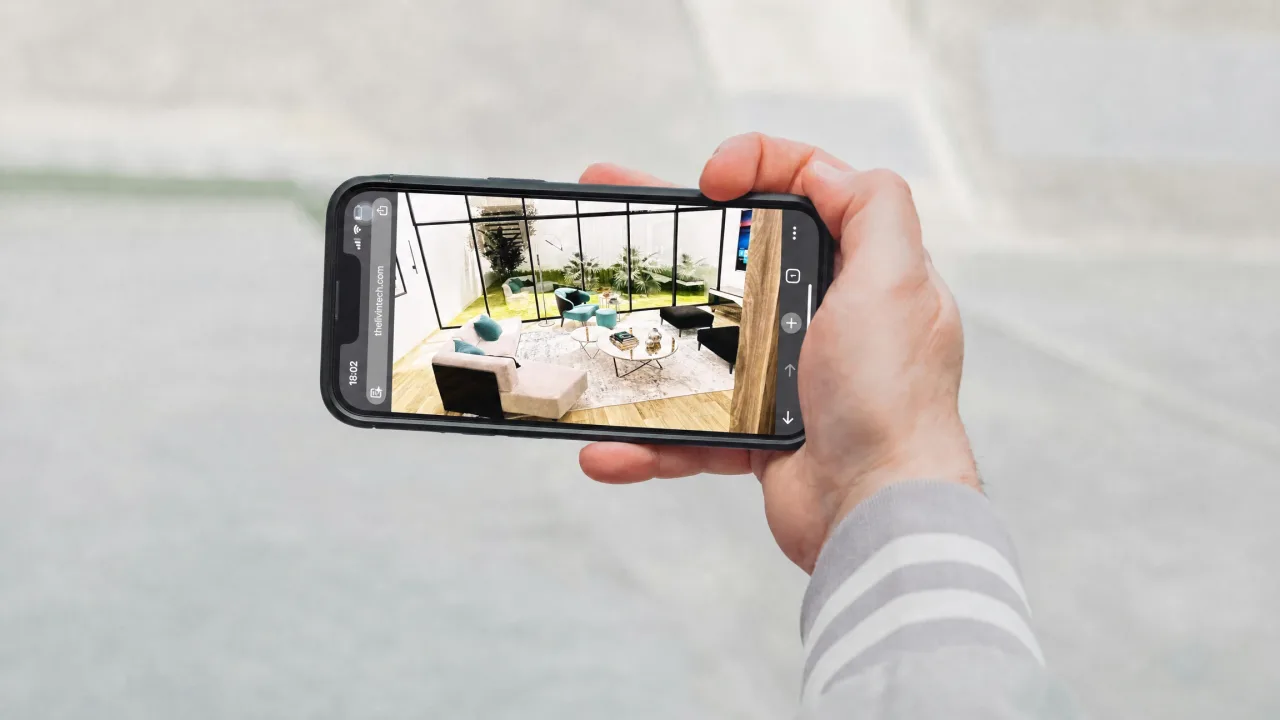
A virtual tour can allow visitors to move between panoramic viewpoints, inspect rooms from different directions, follow floor-plan navigation, and open informational hotspots. This can make spatial relationships easier to understand, particularly for interiors and unbuilt projects.
Interactive presentation is most effective when it supports the project story. Hotspots, transitions, and controls should help the visitor explore the design rather than distract from it.
The aim is not to impress visitors with a technical feature. It is to communicate something that static images cannot show as clearly.
For a detailed explanation of the format, read what a 360-degree architectural rendering is and how panoramic scenes can be presented interactively.
A Cohesive Experience Strengthens the Studio’s Brand
The way project content is presented influences how professional and considered the studio feels.
An external gallery or third-party virtual tour viewer may be functional, but it can also feel disconnected from the main portfolio when its interface, typography, branding, loading behavior, or navigation follows a different system.
A portfolio experience developed as part of the studio’s own website can present still images, project descriptions, floor plans, panoramic scenes, and calls to action within one consistent structure.
This does not mean every studio requires a custom interactive platform. The value lies in making the experience feel intentional and connected.
When the website, project content, and interactive elements follow the same visual language, the studio’s work feels more cohesive.
Clear Service Information Helps Visitors Interpret the Work
Prospective clients should not have to guess what the studio offers from project images alone.
A project may involve architecture, interior design, visualization, documentation, styling, branding, or several different disciplines. Without clear service information, visitors may misunderstand which parts were completed by the studio.
Service pages should explain the current scope of each offer and connect it to relevant project examples.
This helps prospective clients understand both what the studio has done and what they can approach it for now.
Clear service positioning also prevents strong project visuals from attracting enquiries for work the studio does not provide.
Trust Is Built Beyond the Project Images
Projects are the main evidence, but prospective clients may look for additional signals before making contact.
They may want to understand the studio’s experience, team background, design process, areas of responsibility, project types, and approach to collaboration. Relevant publications, testimonials, awards, and professional recognition can also support credibility when presented clearly.
Different clients will have different concerns. Some may want to understand how the studio manages project communication and approvals. Others may care about experience with a particular building type, clarity of scope, coordination with consultants, or who will be responsible for their project.
Addressing these questions helps reduce uncertainty before the first conversation. The portfolio attracts interest, while the surrounding website gives prospective clients enough confidence to take the next step.
Friction Can Weaken an Otherwise Strong Portfolio
Strong work can lose its impact when the website is difficult to use.
Slow-loading media, unclear navigation, broken mobile layouts, intrusive effects, or awkward external viewers can interrupt the visitor while they are evaluating the studio. The problem is not only technical. Every interruption creates another opportunity for the visitor to leave before understanding the work.
Relevant projects should be easy to find and comfortable to review across common devices. Images, animations, drawings, and interactive content should support the presentation rather than compete for attention.
A technically elaborate website is not automatically more persuasive. Clarity, reliability, and ease of use matter more than features that do not help the visitor evaluate the studio.
Project Pages Should Guide the Next Step
A project page should not end with an image gallery and leave the visitor with nowhere to go.
The next step may be to explore a relevant service, view similar work, read another case study, or contact the studio.
The CTA should relate to what the visitor has just reviewed. Descriptive options may include:
Discuss a Similar Project
Explore Our Interior Design Services
View More Hospitality Projects
Contact the Studio
The purpose is not to place aggressive sales messages throughout the portfolio. It is to remove friction when a prospective client is ready to continue.
A visitor who has reviewed a relevant case study should not need to search the footer to find out how to start a conversation.
Common Portfolio Website Problems
Many portfolio websites underperform for reasons unrelated to the quality of the architecture.
Some contain strong images but almost no explanation. Others publish too many similar views, make relevant projects difficult to find, or show outdated work more prominently than current priorities.
Another common problem is unclear authorship. A project may look impressive, but the visitor cannot tell what the studio was responsible for.
Visual effects can also become a distraction. Hidden navigation, unusual scrolling, long introductory sequences, or excessive transitions may create an initial impression while making the actual work harder to evaluate.
The strongest portfolio website is not necessarily the most complex. It is the one that presents the studio’s capabilities clearly and supports the path from interest to enquiry.
Turning Project Work Into Stronger Online Proof
Architecture studios already invest significant effort in design development, presentations, drawings, visualizations, and completed projects. A strong portfolio website ensures that this work continues to communicate value after the presentation or project is finished.
The website brings those materials together into a clear visual pitch. It helps prospective clients understand what the studio can deliver, recognize relevant experience, and feel confident enough to begin a conversation.
LivinTech develops custom portfolio websites with integrated 360-degree virtual tours, interactive project pages, floor-plan navigation, and informational hotspots for architecture and design studios. Where required, our architectural production support can also include 3D models, still renderings, animations, and panoramic scenes used within those experiences.
The studio retains control over project selection, creative direction, and final approval. The role of the website is to present that work through a cohesive experience that makes its value easier to understand.
Learn more about virtual tour website development or contact LivinTech to discuss your studio’s portfolio requirements.